
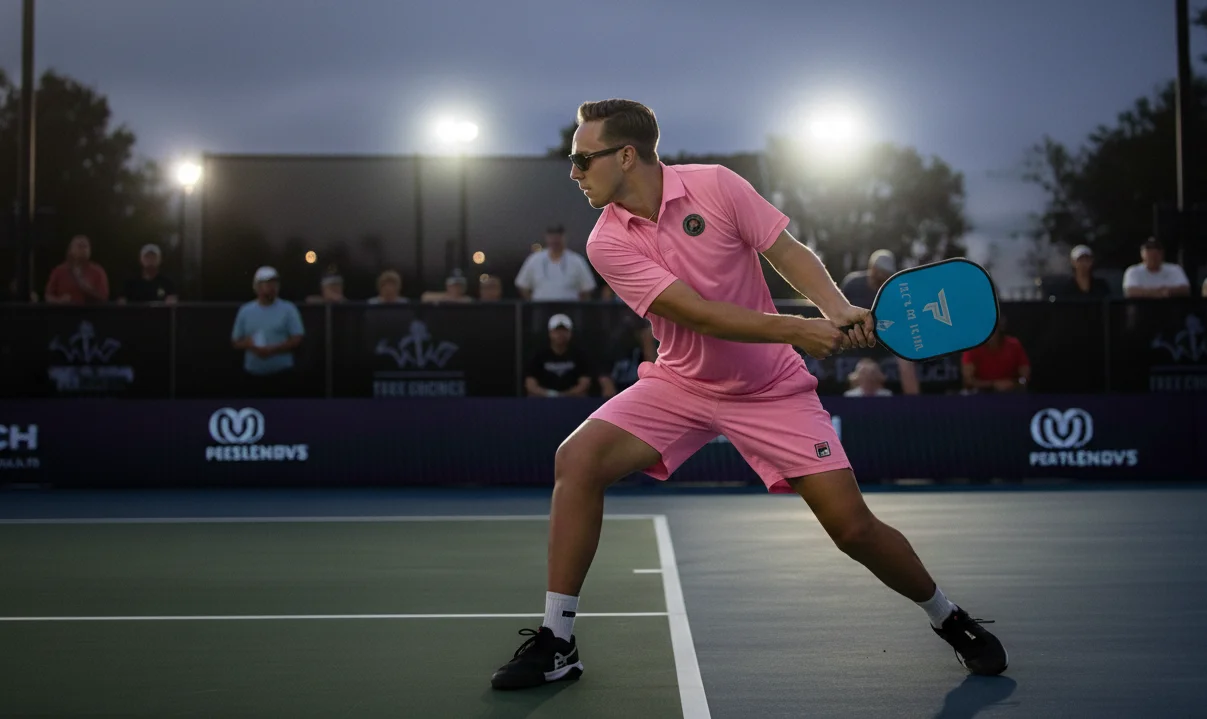
Although it can be difficult to master, the backhand is a crucial skill for pickleball players. Gaining proficiency in pickleball backhand drills can improve your overall performance and consistency during games, regardless of whether you’re playing for the first time or want to improve your competitive game.
Understanding the Pickleball Backhand Foundation
Let’s make sure we comprehend the fundamentals of what makes a backhand truly effective before diving into the particular drills. Backhand shots don’t always feel as natural as forehand shots. To master these shots, you must pay close attention to three things: your body position, your paddle grip, and your swing control. The stroke involves hitting the ball on your non-dominant side, which initially feels awkward but becomes second nature with dedicated practice.
Many beginners struggle with their backhand because they try to muscle through the shot rather than focusing on form and timing. The key lies in building muscle memory through repetitive drills that emphasize correct mechanics rather than power.
Mastering the Pickleball Backhand Grip
A solid backhand always begins with how you hold the paddle. Most players swear by the continental grip because it’s the most adaptable—it lets you switch easily between forehand and backhand shots without ever needing to adjust your hand position.
This option offers extra stability and control for pickleball players considering a two-handed backhand grip, particularly for novices. Similar to a baseball bat grip, your non-dominant hand supports the paddle from above while your dominant hand keeps the continental grip. During prolonged play, this method provides greater power and lessens wrist strain.
The one-handed backhand in pickleball offers greater reach and versatility but requires stronger wrist control and more refined technique. Because of its adaptability during fast exchanges at the kitchen queue, advanced players frequently favour this style.
Essential Pickleball Backhand Technique Elements
Your backhand can be turned from a defensive weakness into an offensive weapon with the correct technique. Put your feet shoulder-width apart, bend your knees slightly, and hold the paddle at chest height to begin. Rotate your shoulders and hips together as the ball moves toward your backhand, keeping your core steady the entire time.
The actual stroke should make contact with the ball just ahead of your body and follow a smooth arc from low to high. Your paddle face should be perpendicular to the ground at impact, with your follow-through extending naturally toward your target. Avoid common mistakes like dropping your paddle head too low or reaching across your body, both of which reduce power and accuracy.
Weight transfer plays a critical role in generating controlled power. Step forward with your front foot as you make contact, shifting your weight from your back leg to your front leg. This kinetic chain multiplies the force generated by your arm and shoulder rotation.
Fundamental Pickleball Backhand Drills for Beginners
Before moving on to more complex methods, starting with simple drills establishes correct form and boosts confidence. Instead of emphasising power or speed, these fundamental exercises emphasise consistency and control.
1. Wall Rally Drill
Stand five to ten feet from a wall and practice hitting controlled backhand shots against it. This drill improves hand-eye coordination and helps you develop a feel for proper paddle angle. With a focus on steady contact points and fluid strokes, try to sustain a continuous rally for 30 to 50 consecutive hits. Immediate feedback from the wall reveals flaws in your technique, enabling quick corrections.
2. Shadow Swing Practice
Without a ball, practice your backhand motion in front of a mirror. This visualisation drill reinforces proper body rotation, paddle path, and follow-through. Perform 20 to 30 repetitions, focusing on your footwork and ensuring your shoulders rotate fully with each swing. Mental rehearsal combined with physical practice accelerates skill development.
3. Partner Feed Drill
Find a friend to stand at the kitchen line and gently feed balls specifically to your backhand side. Start simple with slow, easy-to-reach shots. As you begin feeling more comfortable, gradually make the shots a little tougher.
The main goal here is to focus completely on making clean contact with the ball and aiming for specific spots on the opponent’s side of the court. This particular exercise is great because it bridges the gap between practising on your own and actually playing a real game.
Intermediate Pickleball Backhand Training Exercises
After you’ve mastered the basics, use these exercises to push yourself and mimic real-world game situations.
1. Cross-Court Backhand Rally
With a partner, practise long backhand-to-backhand rallies where both players hit diagonally across the court. This exercise helps you become more adept at controlling shot direction while maintaining constant depth. Aim for rallies lasting 10 to 15 shots, gradually increasing the pace while maintaining accuracy.
2. Backhand Approach Shot Drill
Start this drill at the baseline by hitting a deep backhand drive, and immediately move forward toward the kitchen line. This setup is great because it actually feels like a real match, giving you practice hitting different kinds of shots while you transition from the back of the court to the net. Just remember to stay balanced and always be prepared for the ball coming back to you.
3. Alternating Targets Practice
Set up cones or markers in various court zones and practise hitting backhands to each target in order. This drill improves shot placement versatility and your ability to adjust the paddle angle for various trajectories. Mix up your placement. Go cross-court, down the line and occasionally right down the middle.
Advanced Techniques: Pickleball Backhand Drive and Variations
Your main offensive tool from the baseline is the backhand drive. By combining pace and topspin, this aggressive shot keeps the ball low and forces opponents to make defensive returns. To execute a proper drive, brush up the back of the ball at contact, creating forward rotation that pulls the shot down into the court.
Adding a backhand slice can really boost your defensive game in pickleball. All you need to do is open up your paddle face slightly and make a cutting motion under the ball. This puts backspin on the ball, making it float a bit and then bounce really low. It’s a fantastic way to handle aggressive players and mix up the flow of the rally.
Mastering the pickleball backhand roll requires advanced touch and feel. This shot involves brushing the ball on the top with a closed paddle face, creating heavy topspin that arcs quickly downward. Pull this shot out when you get a floater at the kitchen line or need to crush a lob.
Progressive Pickleball Backhand Tips for Continuous Improvement
This move is ideal for smashing a lob or punishing high balls at the kitchen line. To see where you can improve, record a video of your swing and compare it to that of a professional player. Making minor changes to your follow-through, contact point, or grip pressure can have a big impact.
Incorporate backhand-specific footwork drills into your training routine. Quick lateral movements and proper positioning often matter more than arm strength when executing quality backhands under pressure. Practice split-stepping before each shot and moving efficiently to establish ideal positioning.
Work on anticipation by studying your opponents’ body language and paddle positioning. Recognizing backhand opportunities early gives you extra time to prepare and execute with proper technique rather than reacting desperately to difficult shots.
Creating Your Pickleball Backhand Practice Routine
Dedicate at least 15 to 20 minutes of each practice session exclusively to backhand development. Begin with warm-up drills focusing on form, progress to intermediate exercises building consistency, and finish with challenging scenarios that simulate match pressure.
Track your progress by counting consecutive successful backhands during drills or by measuring your accuracy against target zones. Quantifiable metrics provide motivation and reveal which aspects of your backhand need additional attention.
Frequently Asked Questions (FAQs)
Practice wall rally drills daily for 15-20 minutes to build muscle memory and consistency. Focus on proper grip, body rotation, and strengthening your core and shoulder muscles through targeted exercises.
Shadow swings and wall rally drills help reinforce proper mechanics and build consistency. Cross-court rallies with a partner and resistance band exercises strengthen the specific muscles used in backhand strokes.
The continental grip is the most versatile option for pickleball backhands. Beginners may prefer a two-handed grip for stability, while advanced players often use one-handed for greater reach.
Common mistakes include incorrect grip, failing to rotate shoulders and hips, and dropping the paddle head too low. Players also frequently reach across their bodies instead of stepping into shots and maintain poor weight transfer.
Power comes from proper kinetic chain sequencing, starting with shoulder rotation and transferring weight from the back to the front foot. Engage your core muscles and follow through completely toward your target for maximum power.