
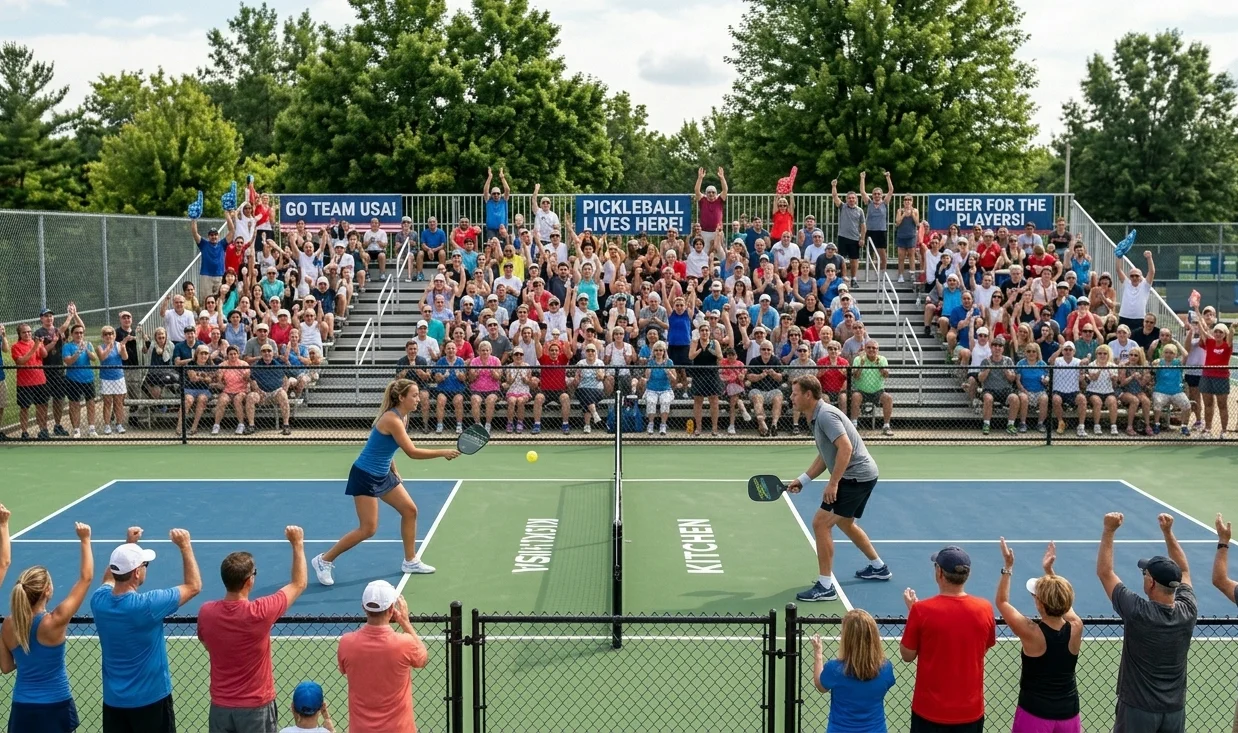
Five years ago, if you mentioned pickleball at a dinner party, you’d likely get blank stares. Today? It’s the conversation starter at fitness clubs, retirement communities, and corporate wellness events nationwide.
Something remarkable is happening in American sports. While traditional racquet sports struggle to grow, pickleball is experiencing an explosive renaissance that shows no signs of slowing down. We’re not talking about a modest uptick in participation—we’re talking about a sport that’s become a cultural phenomenon, redefining who plays sports and how they play them.
In 2026, pickleball isn’t just America’s fastest-growing sport; it’s reshaping our understanding of athleticism, community, and what it means to stay active. The numbers tell an incredible story, but the real narrative is even more compelling.
Understanding the Phenomenon of Pickleball Growth
1. Explosive Participation Rates
Pickleball participation has seen a skyrocketing growth trajectory. Reports indicate that in 2026, **24.3 million Americans actively play pickleball**, a 22.8% increase from previous years. This staggering rise equates to more than 171% growth in just three years, according to data from the Sport & Fitness Industry Association (SFIA). Such robust growth is evident in both casual players and competitive enthusiasts.
2. Demographic Shift: A Game for All Ages
Originally embraced by older adults as a low-impact exercise, pickleball has expanded its appeal. Over 70% of the player base now falls within the 18–44 age bracket, with an average age of 34.8 years. The sport’s intergenerational nature allows players of all ages, including families, teenagers, and senior citizens, to connect through gameplay.
3. Infrastructure Expansion
To meet soaring demand, cities and private organizations have ramped up investments in court development. With over 82,000 pickleball courts available across the U.S. and 14,000 more built in 2024 alone, accessibility is at the core of the sport’s popularity. Some urban areas have even repurposed spaces like tennis courts to cater to the pickleball crowd.
4. Cultural and Media Impact
Pickleball has found its foothold in mainstream culture. High-profile sponsors, celebrity endorsements, and coverage in major TV sports channels are driving engagement. It’s easy to see why institutions like NBC and ESPN are investing in professional pickleball leagues and tournaments—pickleball is now as much a spectator sport as it is a participative activity.
5. Global Reach
While the United States is undoubtedly the epicenter of pickleball growth, the sport is expanding worldwide. Organizations like the International Federation of Pickleball report that over 80 million players globally engage in this rapidly spreading phenomenon.
Why is Pickleball So Popular? A Breakdown of the Key Factors
1. Accessibility & Simplicity
Pickleball is easy to learn, making it a welcoming choice for beginners. Similar to a blend of tennis, badminton, and ping pong, its simple setup means new players can pick it up with ease—and quickly become hooked.
2. Affordability
With minimal equipment needs—just a paddle, some balls, and a court—pickleball avoids the high cost often associated with entry into other sports.
3. Social Gameplay
One of the sport’s greatest strengths is its blend of fun and community engagement. It’s not uncommon for players to build lasting friendships on and off the court.
4. Health Benefits
The sport also strikes an excellent balance between fun and fitness, providing cardiovascular exercise while being easy on the joints. This feature widens its appeal to all ages.
5. Competitive Edge
For athletes, the increasingly professionalized pickleball scene, complete with tournaments, sponsorships, and televised events, provides ample opportunities for competition.
Key Statistics of Pickleball Growth Rate (2026)
– Participants in the U.S.: 24.3 million (171% growth in just 3 years)
– Average Growth Rate: 15–20% annually
– Economic Impact: $1.9 billion in 2025, projected to hit $4.4 billion by 2033
– Global Players: Over 80 million in 78 countries
– Courts in the U.S.: 82,000, with significant investments continuing
Pickleball Trends in 2026
1. Rise of Youth Leagues
Expect to see a rise in organized pickleball leagues tailored to young players, ensuring further demographic diversification.
2. Corporate & Workplace Integration
Companies are incorporating pickleball into workplace wellness programs.
3. Technological Advancements
From app-enabled scorekeeping to advanced paddles, technological innovation is infiltrating the sport.
4. Popularity in Canada and Beyond
Pickleball is witnessing explosive growth in Canada, Europe, and Asia, with tournaments being held at an unprecedented rate.
How Pickleball Beat Tennis (and Other Sports) at the Growth Game
Tennis participation has stalled. The sport claimed about 25.7 million American participants in 2024, up just 8% from 2023. Over the previous three years, tennis grew by approximately 10%. These numbers are respectable for an established sport but pale in comparison to pickleball’s trajectory.
If current growth rates persist—and there’s no evidence they won’t—pickleball will surpass tennis in total U.S. participation by 2027 or 2028. That would mark a historic shift in American sports culture.
Why is pickleball winning while tennis struggles? Several factors:
- Learning curve: New players hit playable shots in minutes with pickleball. Tennis requires weeks.
- Physical demand: Tennis is harder on aging bodies. Pickleball isn’t.
- Pace of play: Pickleball rewards thinking and positioning. Tennis rewards athleticism and power. More people relate to thinking.
- Social structure: Tennis is often competitive and can be isolating. Pickleball is inherently social.
- Court availability: More pickleball courts are being built than tennis courts, and they’re easier to repurpose.
This isn’t just speculation—it’s playing out in court construction, facility investments, and equipment sales across the country.
FAQs (Frequently Asked Questions)
Pickleball’s growth stems from its accessibility, affordability, and universal appeal. It resonates with people due to its social and fitness aspects, easily adaptable gameplay, and community-oriented spirit.
The sport has experienced an average annual growth rate of 15–20% in recent years. With participation numbers climbing steadily, this trajectory is expected to continue.
Yes! While originating in the U.S., pickleball has expanded to over 78 countries. Its global player base exceeds 80 million.
While tennis remains globally dominant, pickleball’s unprecedented growth rate surpasses that of tennis, especially among recreational players.
Conclusion: A Legacy Sport in the Making
Pickleball’s accolades as the “fastest-growing sport in America” are well justified. With its uniquely inclusive appeal, rich community ties, and adaptability, it has solidified its position as a defining sport for the modern age. As both an engaging pastime and a competitive pursuit, pickleball shows no signs of slowing down in the U.S. or beyond.