
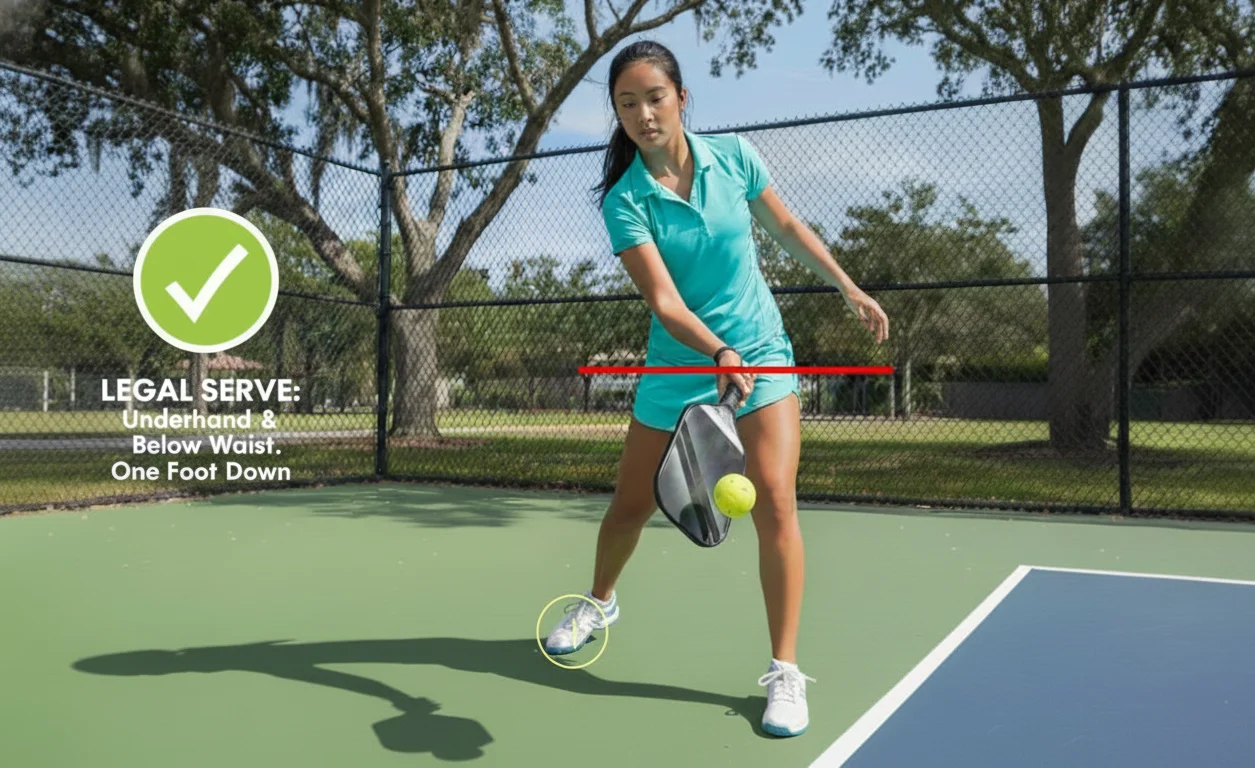
One sunny morning, at our local pickleball court, a heated game was unfolding. It was Sarah’s turn to serve. With a confident leap, she hit the ball like a pro. But wait—was that legal? Her opponent, Mike, called a foul, pointing to something about “maintaining ground contact”. Confusion ensued, and as the game paused for a rule check, I realized how often even seasoned players overlook or misunderstand the intricate rulings of pickleball.
Pickleball might be easy to pick up, but there’s a myriad of nuanced rules you might not know. Whether you’re a beginner or a seasoned pro, brushing up on these “pickleball rules” will give you an extra edge on the court.
The Serve: The Core of the Game
The serving rules in pickleball aren’t as straightforward as many think. Sure, hitting the ball over the net sounds simple. But there’s more to it, and several subtleties can dictate whether your serve is legal or not.
What Is a Legal Serve in Pickleball?
To ensure your serve is ruled legal:
- 1. The serve must be underhand, meaning your paddle needs to contact the ball below the waist.
- 2. The ball can bounce before you hit it, but you’re not allowed to apply excessive force during this act. If you’re familiar with the term “bounce serve,” yes, it’s legal, but the execution matters.
- 3. Maintain at least one foot on the ground while making contact with the ball—jump serves where no feet remain grounded are not allowed.
Pickleball Serve Position Rules
Positioning matters too. The serve should be executed behind the baseline, and you must stay within the sidelines. Think of the sidelines as extended, imaginary lines framing your service zone. Angle serves, or super wide serves, are only valid if they originate from within this imaginary boundary.
Breaking Down the Serve Techniques
1. Underhand Serve Pickleball
The underhand serve is not just tradition; it’s a rule. Utilizing it correctly ensures accuracy and keeps you compliant with the rules. Many players swear by this technique as it offers better control and often surprises opponents who anticipate a powerful serve.
2. Mastering the Pickleball Serve Rules 2026
With minor yet important updates introduced recently, players need to be extra cautious. Here’s a pro tip: always practice adhering to the rules so that you’re reflexively compliant even under game pressure. Remember, a well-executed serve is your first opportunity to control the game.
Strange but Important Rules You Didn’t Consider
1. The Bounce Serve Controversy
If you’re bouncing the ball before a serve, it must be a bounce before the paddle strikes it—not an unnecessary prolonged dribble. Players often misunderstand this rule and unintentionally violate it under tense conditions.
2. Jump Serves: Risk vs. Reward
The excitement of leaping into the air to deliver a serve might make you feel like a professional athlete, but in pickleball, you’ll need one foot grounded during contact. Make sure your power serves don’t fall prey to this rule.
3. Hitting Angled Shots
Many think they can stand outside the court limits to serve at an extreme diagonal. This incorrect understanding can cost you points. Always serve from within the extended sidelines.
Frequently Asked Questions (FAQs)
Yes, a bounce serve is legal! However, you can’t add excessive force while bouncing the ball. Always ensure you follow the proper paddle strike technique.
A legal serve must be underhand, with the paddle contacting the ball below the waist. At least one foot should be grounded, and the serve must originate behind the baseline.
Yes, you can bounce the ball before serving, but this isn’t the same as a bounce serve. Be mindful of not using extra downward force when executing the bounce.
No, a jump serve is not allowed if both feet are off the ground when you make contact with the ball. At least one foot should always stay in contact with the ground.