
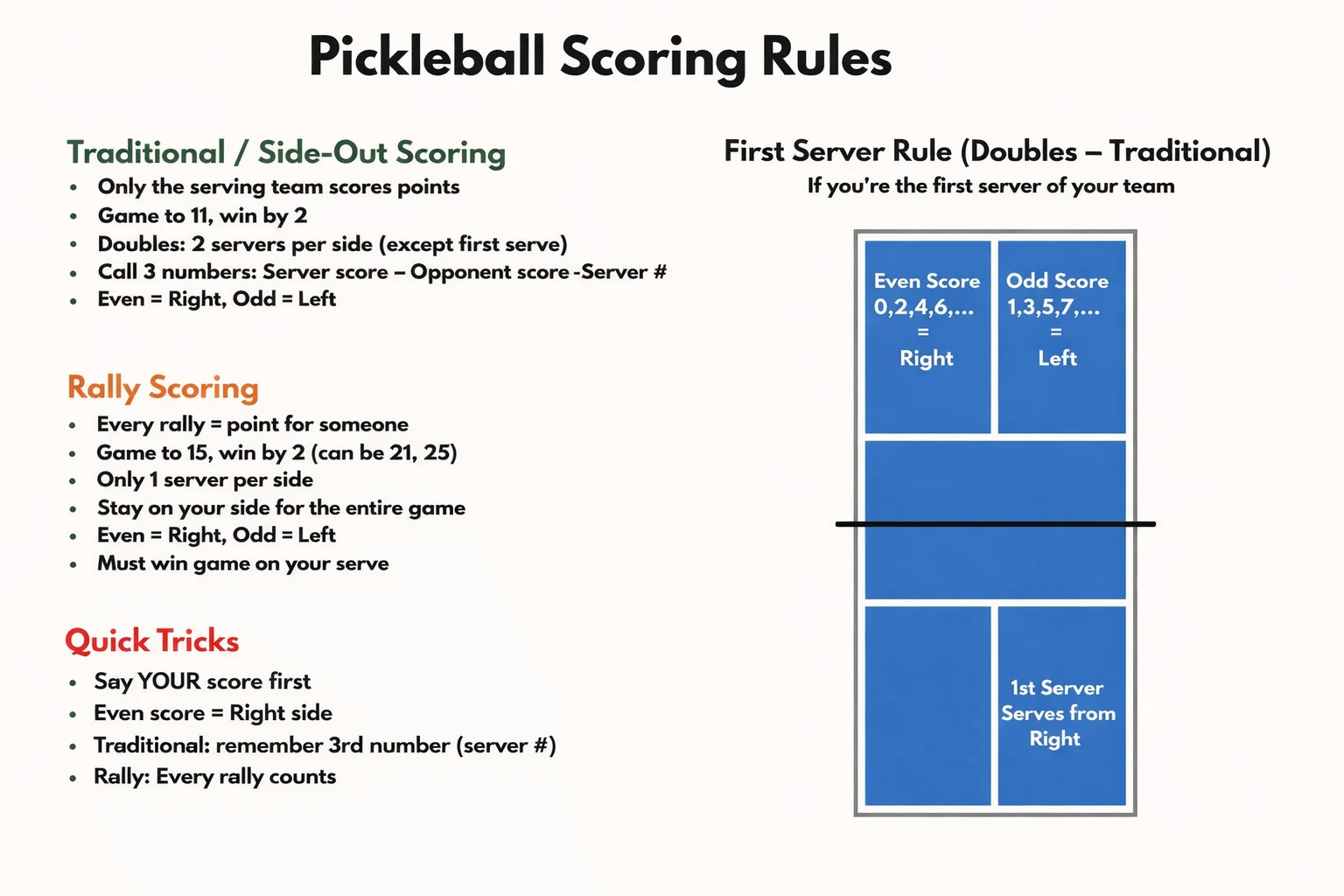
“Match point!” shouted Lisa as she served the ball during her first competitive pickleball game. She was brimming with excitement, yet there was a slight hesitation in her action. With the scorekeeper calling 8-9-2, Lisa glimpsed confusion on the faces of some new players watching. “What does that mean?” they murmured.
Does this sound like you or someone in your circle? You’re not alone! Whether you’re a seasoned player or just starting, understanding “pickleball scoring rules” can feel tricky at first. Fear not! This comprehensive guide will demystify scoring so you can enjoy the game and even explain the system to others with confidence.
The Essentials of Pickleball Scoring Basics
At its core, scoring in pickleball is simpler than it sounds. Here are the quick-to-grasp basics:
- Played to 11 points, and the team must win by at least 2 points.
- Points can only be scored by the serving team.
- Scores are announced as server’s score–receiver’s score–server number before each serve.
Pickleball is the game that thrives on its simplicity, so if you’re getting overwhelmed, just repeat to yourself: “Server, Receiver, Rotation.”
Pickleball Points System: Understanding the Scoring System
The pickleball scoring system focuses on rewarding strategy and precision. Whether you’re playing a quick match with friends or a high-stakes tournament, these rules apply across the board:
1. Pickleball Singles Scoring Rules
In singles, scoring is straightforward:
- Each player serves from the “right” when their score is even and from the “left” when odd.
- A single server can continue serving until they commit a fault by:
- Missing the service bounds.
- Failing to earn a point.
2. Pickleball Doubles Scoring Rules
Doubles scoring adds a layer of complexity:
- Each team has “two serves” per side out.
- The first server begins on the right, and their partner continues from the left.
- After both partners serve, the “side-out” rule applies—that’s when service transfers to the opposing team.
The Famous Two-Bounce Rule in Pickleball
To keep play fair and balanced, the two-bounce rule in pickleball states:
- The ball must bounce “once” on each side before players are allowed to volley (hit the ball directly without bouncing it first).
This rule is crucial for enforcing longer rallies and a fair start after a serve.
Rally Scoring Explained: A Twist on Traditional Pickleball
While traditional scoring rewards only the serving team, pickleball rally scoring allows points to be earned by either team—whether serving or receiving. This variant picks up the pace of the game and tends to be popular in informal matches or beginner practice sessions.
How to Use a Pickleball Scoring Sheet
Keeping score during competitive matches can be daunting. Here’s how a pickleball scoring sheet comes in handy:
- Record server numbers to ensure fairness.
- Keep track of total points scored and fault plays.
- Monitor side-outs to prevent misunderstandings.
Scoring sheets aren’t just for tournaments—try using one during practice to better understand how scoring flows!
Frequently Asked Questions (FAQs)
1. Write or call out scores as server’s points–receiver’s points–server number.
2. Assign faults, service changes, and side-outs as appropriate.
3. Double-check points after each completed rally.
Points can only be scored by the serving side in traditional scoring. Points are awarded when the receiving team commits a fault:
– Missing a shot.
– Serving incorrectly or stepping into the kitchen.
Rally scoring is an alternative format where points are scored by either team, regardless of who is serving. It speeds up gameplay and makes for a fast-paced experience.
1. Start by filling out the names of participating players.
2. Track individual points, faults, and side-outs.
3. Regularly verify totals to avoid disputes.