
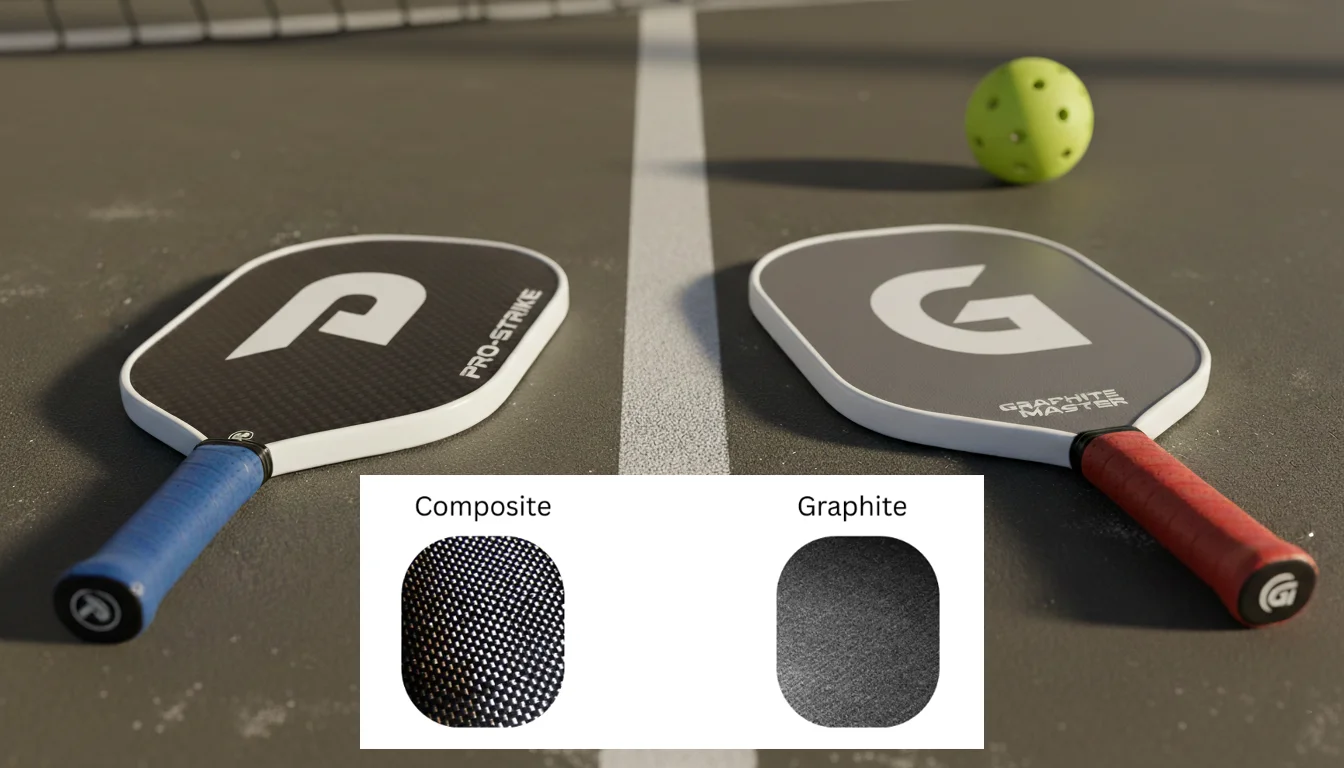
Selecting the right pickleball paddle can dramatically transform your game, whether you’re stepping onto the court for the first time or competing at advanced levels. The material composition of your paddle influences everything from power generation to ball control, making the choice between graphite and composite surfaces one of the most critical decisions you’ll face as a player.
Understanding the fundamental differences between graphite pickleball paddles and composite pickleball paddles empowers you to make an informed investment that aligns with your playing style, skill level, and performance goals. This comprehensive guide explores the distinctive characteristics of each paddle type, helping you navigate through technical specifications and real-world performance factors.
Understanding Graphite Pickleball Paddles
Graphite paddles feature a thin carbon fiber surface layer that’s renowned for its exceptional strength-to-weight ratio. This advanced material has revolutionized paddle construction since its introduction to the sport, offering players a responsive hitting surface that delivers consistent performance across various shot types.
The manufacturing process for graphite paddles involves layering carbon fiber sheets over a core material, typically polymer honeycomb or aluminum. This construction method creates a paddle face that’s remarkably thin yet incredibly durable, measuring between 0.5mm to 1mm in thickness. The resulting paddle provides immediate feedback upon ball contact, allowing players to feel exactly where the ball strikes the surface.
Lightweight graphite pickleball paddles typically weigh between 6.5 to 8 ounces, making them ideal for players who value maneuverability and quick reactions at the net. The reduced weight minimizes arm fatigue during extended play sessions while enabling rapid paddle positioning for volleys and defensive returns.
Professional players frequently gravitate toward graphite surfaces because of their predictable ball response and touch sensitivity. The rigid nature of carbon fiber transmits minimal vibration while maintaining excellent control over shot placement, particularly important for executing precise dinks and drop shots that define modern pickleball strategy.
Exploring Composite Pickleball Paddles
Composite pickleball paddles encompass a broader category of paddle construction that utilizes fiberglass, carbon fiber blends, or other synthetic materials for the hitting surface. What is a composite pickleball paddle exactly? It’s a paddle that combines multiple materials to achieve specific performance characteristics, offering versatility that appeals to players with varying skill levels and playing preferences.
The fiberglass layers used in composite paddle construction are typically thicker than pure graphite surfaces, ranging from 1mm to 2mm in thickness. This additional material creates a slightly softer hitting surface that generates more spin potential and provides a larger sweet spot compared to graphite alternatives.
Composite paddles excel at power generation due to the slight flex in the paddle face upon ball contact. This trampoline effect propels the ball forward with less effort from the player, making composite options particularly attractive for beginners who haven’t yet developed consistent swing mechanics or players who prefer a baseline power game.
The texture variations possible with composite materials also contribute to enhanced spin capabilities. Manufacturers can incorporate rougher surface treatments or textured finishes that grip the ball more effectively during contact, allowing players to impart topspin on groundstrokes or slice serves with greater consistency.
Difference Between Graphite and Composite Pickleball Paddles
The difference between graphite and composite pickleball paddles extends beyond surface materials to encompass fundamental performance characteristics that influence every aspect of gameplay.
1. Weight Distribution and Balance
Graphite paddles typically feature even weight distribution or slight head-light balance, promoting quick hands and excellent maneuverability at the kitchen line. Composite paddles often carry slightly more weight in the head, generating additional momentum for powerful baseline drives and serves.
2. Ball Response and Feel
The rigid graphite surface provides crisp, immediate feedback with minimal vibration transfer to your hand. Players describe graphite touch as “connected” to the ball, offering precise control over shot direction and pace. Composite surfaces deliver a softer, more cushioned feel with slightly delayed response that some players find more forgiving on off-center hits.
3. Power versus Control
Composite paddles generally produce more raw power due to surface flex and energy return upon ball contact. Graphite paddles prioritize control and placement, requiring players to generate power through proper technique and swing mechanics rather than relying on paddle construction.
4. Spin Generation
While both materials can produce spin, composite surfaces typically offer superior spin potential due to increased surface texture and ball dwell time. The softer composite face grips the ball fractionally longer, allowing paddle rotation to impart more spin on the ball.
5. Durability Considerations
Graphite surfaces resist surface wear exceptionally well, maintaining their performance characteristics throughout years of regular play. Composite paddles may show surface wear more quickly, particularly with aggressive playing styles, though modern manufacturing techniques have significantly improved composite durability.
Best Graphite Pickleball Paddle Options
When researching graphite pickleball paddle reviews, several factors deserve consideration beyond surface material alone. Core construction, paddle thickness, handle length, and grip circumference all contribute to overall performance and player satisfaction.
Leading graphite paddle models typically feature polymer honeycomb cores that balance lightweight construction with responsive feel. The best graphite pickleball paddle for your game depends on whether you prioritize touch and finesse or need additional weight for stability on harder shots.
For beginners exploring the best graphite pickleball paddle for beginners, models with slightly larger sweet spots and forgiving edge guards provide confidence during the learning curve. These entry-level graphite options deliver the performance benefits of carbon fiber construction without the premium price tags associated with professional-grade paddles.
Best Composite Pickleball Paddle Selections
The best composite pickleball paddle choices span various price points and performance levels, making this category accessible to players with different budgets and skill levels. Entry-level composite paddles offer excellent value, providing solid performance at affordable prices that won’t break the bank as you develop your game.
Mid-range composite options incorporate enhanced core technologies, improved edge guard systems, and refined surface treatments that elevate performance while remaining reasonably priced. Premium composite paddles compete directly with high-end graphite models, featuring advanced material blends and construction techniques that maximize power, spin, and durability.
Making Your Decision: Which Paddle Suits Your Game?
Your ideal paddle choice depends on several personal factors that extend beyond simple material preferences. Consider your current skill level, playing style, physical considerations, and performance priorities when evaluating graphite versus composite options.
1. For Finesse Players:
Graphite paddles excel for players who emphasize touch, control, and strategic placement over raw power. If your game revolves around soft hands at the kitchen line, precise dinking, and methodical point construction, graphite delivers the responsiveness you need.
2. For Power Players:
Composite paddles suit aggressive baseliners who attack with drives, put-away volleys, and forceful serves. The inherent power generation of composite construction complements attacking playing styles.
3. For Developing Players:
Beginners often benefit from composite paddles that forgive minor technical errors while providing adequate power without perfect swing mechanics. As skills advance, many players transition to graphite for enhanced control.
4. For Comfort Considerations:
Players with arm, elbow, or shoulder concerns may find composite paddles more comfortable due to increased vibration dampening and softer ball response.
Frequently Asked Questions
No single paddle material is best for everyone. Graphite is better for control and precision, while composite offers more power and spin, so the right choice depends on your playing style and skill level.
Most professional players use graphite or carbon fiber paddles with polymer cores because they offer better control, consistency, and touch. Graphite is popular at the pro level due to its excellent feedback and precise shot control.
Composite pickleball paddles use fiberglass or mixed synthetic surfaces layered over a honeycomb core. This design helps create more power, better spin, and a larger sweet spot compared to pure graphite paddles.
Graphite paddles are much better than wood paddles in weight, power, control, and spin. Wood paddles are mainly for casual or budget players, while graphite is the better choice for competitive performance.
The best paddle material depends on your priorities: choose graphite for control and precision, or composite for power, spin, and a larger sweet spot. Testing both helps find the right fit for your playing style.
Conclusion
Choosing between graphite and composite paddles affects your playing style and overall development, not just the material itself. Graphite paddles deliver unmatched control and responsiveness for players who emphasize finesse and precision, while composite options provide power and forgiveness that benefit aggressive playing styles.
Understanding the fundamental differences between these paddle types empowers you to make confident equipment decisions aligned with your goals on the court. Whether you ultimately select a lightweight graphite paddle for touch and control or embrace the power potential of composite construction, choosing the right paddle accelerates your pickleball journey and enhances your enjoyment of this rapidly growing sport.