
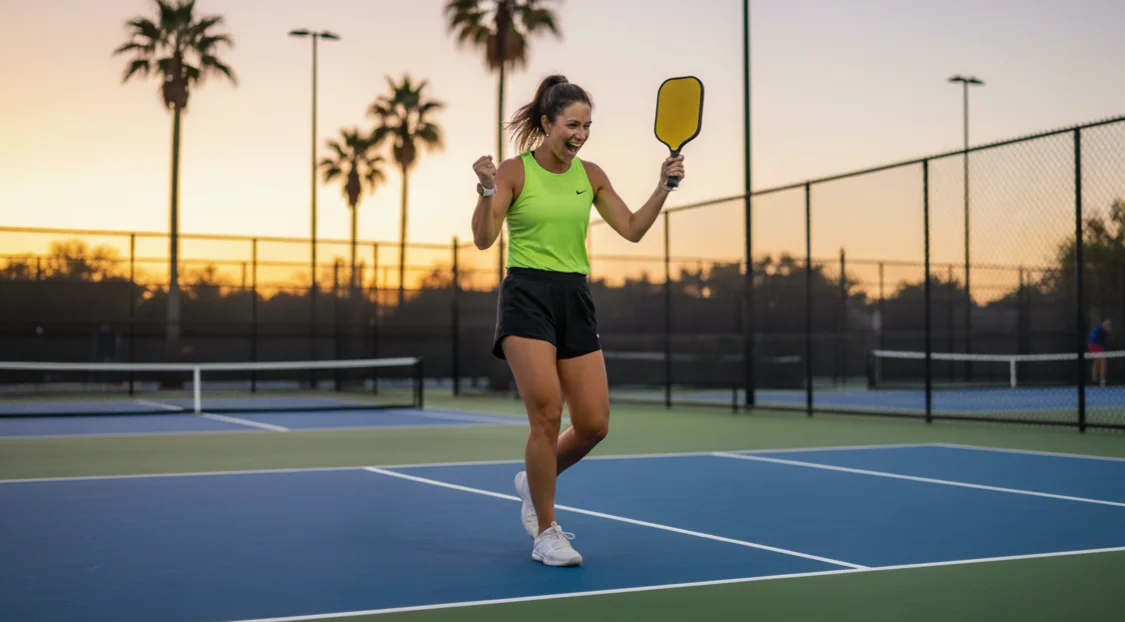
Pickleball has emerged as one of the most popular sports in the United States, attracting players of all ages and skill levels. Whether you’re just getting started or have been playing for a while, understanding the right pickleball strategies can dramatically improve your game and increase your chances of winning. We’ll explore five must-know pickleball strategies that can truly improve your game. These practical pickleball tips, advanced techniques, and this complete pickleball strategy guide will help you gain control and dominate the court.
These strategies are perfect for players of all levels, from beginners to advanced enthusiasts, and will provide you with the tools to improve your skills and gain a competitive edge. So, let’s explore these best pickleball strategies and learn how to play pickleball like a pro!
1. Mastering the Pickleball Serve
The pickleball serve is arguably the most important shot in the game, and mastering it can give you a significant advantage right from the start. An effective serve can set the tone for the entire match, putting your opponent on the defensive. But what is the best pickleball serve strategy?
Serve Placement and Spin
The key to a strong serve is placement and spin. Beginners should focus on serving deep to the back of the court to push their opponent further back, making it difficult for them to return the ball effectively. As you gain experience, add side spin to your serves to make the ball curve away from your opponent, making it harder for them to read and return.
Another important technique is the underhand serve. While many players overlook this, it can be an effective surprise tactic, especially against opponents who stand too far back on the baseline.
Advanced Tips for Serving
- Vary your serves to keep your opponent guessing. Alternate between deep, short, and angled serves to force your opponent into making mistakes.
- Use a slow serve occasionally to throw off your opponent’s rhythm.
- Focus on consistency over power. A consistent serve that lands in the right spot is often more effective than a powerful but erratic serve.
2. Dinking: The Key to Control
In pickleball, dinking refers to soft shots that land just over the net, requiring delicate control and precision. It’s a fundamental skill in pickleball, particularly in doubles play, and is essential for controlling the pace of the game.
Why Is Dinking Important?
Dinking forces your opponent to play a slower, more controlled game, which in turn opens up opportunities to attack. By keeping the ball low and making it difficult for your opponent to attack, you gain more control of the rally. It’s also an essential part of the game when you’re close to the net.
How to Improve Your Dinking Skills
- Stay balanced and patient: Dinking requires a controlled, steady stance. Don’t rush your shots—focus on placement rather than power.
- Work on your dinking technique: Keep the paddle angle open and use your wrist to guide the ball, ensuring it stays low over the net.
- Mix up your dinks: Don’t always play the same type of dink. Change the speed, angle, and depth of your shots to keep your opponent on their toes.
3. Court Positioning: The Foundation of Successful Play
Proper court positioning is one of the best pickleball techniques and a key to understanding how to play pickleball strategically. Good positioning allows you to cover the court efficiently and react quickly to your opponent’s shots. It’s especially important in doubles, where coordination with your partner is crucial.
Positioning Tips for Singles and Doubles Play
- Singles: Position yourself in the center of the court to cover the most ground. Stay slightly behind the baseline to give yourself enough time to react to your opponent’s shots.
- Doubles: In doubles, the ideal positioning is side-by-side near the net. The player on the left should be ready to cover the left side, while the player on the right should cover the right. Keep your paddle up and in the ready position to respond quickly.
Court Awareness
- Shift your position as soon as you hit the ball. Always be ready to move toward the net after serving or returning the ball.
- Communicate with your partner in doubles play. Make sure you both know who is covering which area of the court, preventing any confusion.
4. Using the Third Shot Drop
The third shot drop is one of the most crucial strategies in pickleball, especially for beginners learning how to gain control of the game. This shot is played after the serve and the return of serve, and it’s designed to drop the ball softly into your opponent’s non-volley zone (the kitchen).
Why Is the Third Shot Drop So Effective?
The third shot drop slows down the pace of the game, allowing you to move to the net. It’s a strategic shot that prevents your opponent from attacking right away and forces them to play defensively.
Tips for Executing the Third Shot Drop
- Focus on trajectory: Aim to drop the ball just over the net, landing in the non-volley zone.
- Use soft hands: Don’t hit the ball too hard. Instead, use soft hands and control the ball with a gentle touch.
- Practice consistency: The third shot drop requires a delicate touch, so practice regularly to improve your consistency.
5. Exploiting Your Opponent’s Weaknesses
Understanding pickleball tactics goes beyond just perfecting your shots; it also involves learning how to read and exploit your opponent’s weaknesses. Whether it’s their footwork, weak backhand, or inability to respond to certain serves, being able to identify and attack those areas is crucial to winning more games.
How to Spot Weaknesses
- Watch for footwork issues: If your opponent is consistently out of position or struggles to move laterally, aim your shots at their weaker side or the area they’re having difficulty covering.
- Attack weak strokes: If your opponent has a weak backhand, aim for that side as much as possible to force errors.
- Use angles: By hitting angled shots, you can stretch your opponent and force them to move more than they’re comfortable with.
Attacking the Weakness
Once you’ve identified your opponent’s weakness, make it a point to target it consistently. However, don’t become too predictable; mix up your shots to keep them guessing.
FAQs
The best pickleball serve strategy involves consistency, deep placement, and varying spin. Beginners should focus on serving deep to the baseline, while advanced players can experiment with side spin or underhand serves to keep their opponent off balance.
Playing pickleball strategically involves mastering fundamental techniques like dinking, court positioning, and the third shot drop. Understanding your opponent’s weaknesses and exploiting them also plays a key role in playing strategically.
The best basic strategy for beginners is to focus on dinking, accurate serving, and proper court positioning. Start slow, control the game with soft shots, and gradually work on more advanced techniques as your skills improve.
Beginners should focus on improving their pickleball serve, mastering dinking, and learning proper court positioning. Regular practice and understanding the flow of the game will help you improve your pickleball strategy over time.
Dinking is a soft shot that lands just over the net, and it’s crucial because it allows players to control the pace of the game and set up stronger shots. It forces opponents to play more defensively, creating opportunities for attacking.
Conclusion
Mastering pickleball strategies is essential for success, whether you’re a beginner or an advanced player. By focusing on key strategies like the serve, dinking, court positioning, and third shot drop, you can significantly improve your chances of winning. These pickleball advanced tips will help you approach each match with confidence and precision.
Remember, the best pickleball strategies come with consistent practice and an understanding of your opponent’s weaknesses. So, get out there, refine your techniques, and start winning more games today!