
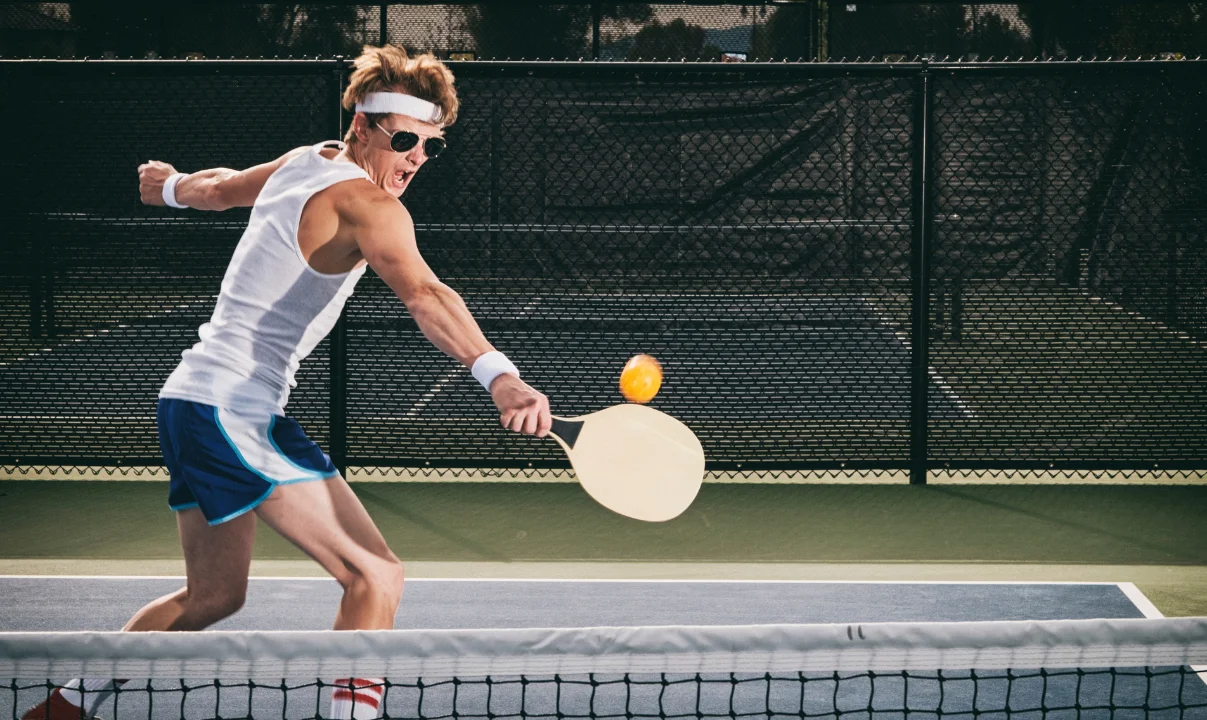
If you have spent time near pickleball courts, you have probably heard players mention “dinking.” A dink in pickleball is a soft shot that lands in the opponent’s non volley zone. Experienced players view it as one of the most essential skills to learn because it controls the pace of the game and forces opponents to hit upward, which limits their attacking options. If you’re starting and need to know the basics, or you’re an intermediate player trying to refine your technique, this guide will change how you think about the dink shot and help you level up your entire game.
Understanding the Pickleball Dink Shot
A dink in pickleball is basically a gentle, controlled hit that arcs softly over the net and drops right into the opponent’s non-volley zone, which everyone usually calls “the kitchen.” The dink shot is different from strong drives or aggressive smashes; it’s all about having finesse, a gentle touch, and smart placement—power has nothing to do with it. This subtle yet sophisticated shot is designed to keep the ball low, forcing your opponents to hit upward and preventing them from attacking aggressively.
The term “dink” might sound casual, but don’t let that fool you. What does dink mean in pickleball? It represents a strategic weapon that controls the pace of the game, creates opportunities for winners, and demonstrates true mastery of court positioning and ball control. Professional players often engage in extended dinking rallies, sometimes exchanging dozens of dinks while waiting for the perfect opportunity to attack.
The Strategic Importance of Dink Shots
Learning to dink in pickleball changes your whole outlook on the game. The dink shot brings many strategic benefits to a player, which makes it absolutely necessary to learn for those who wish to compete seriously. First, it closes down the aggressive players altogether because they have to handle a ball that just stays low over the net, not allowing them those strong attack shots. Second, it allows you to maintain control of rallies while conserving energy, rather than constantly defending against hard drives.
The dink also creates offensive opportunities. By consistently placing dinks at your opponent’s feet or to the sidelines, you force them into uncomfortable positions. Eventually, they’ll be compelled to hit a ball that pops up slightly higher than intended, giving you the chance to transition from defensive dinking to an offensive put-away shot. This patient’s strategic approach separates advanced players from beginners who rely solely on power.
Pickleball Dink Technique: The Fundamentals
Learning proper pickleball dink technique begins with body positioning and paddle preparation. Is mein se bhi AI text aur Plagrism remove kardo, weight on the balls of your feet, and paddle held out in front of your body at chest height. This stance allows for good reactions and provides smooth weight transfer during this shot.
When you hit a dink, you should use a continental grip—think of it like you’re holding a hammer. This grip gives you the best control for those soft touches. The stroke itself should be compact and controlled, using primarily your shoulder and arm rather than excessive wrist movement. Think of your paddle face as an elevator, gently lifting the ball over the net with a slight upward trajectory.
To hit a successful dink shot in pickleball, you primarily need to focus on managing the speed and the angle of your paddle. When you make contact, move your paddle forward and slightly up. Keep that touch gentle, though—the goal is to absorb the ball’s energy, not smash it hard. You should make contact with the ball slightly in front of your body.
Advanced Dinking Variations and Strategies
Once you’ve mastered basic dink mechanics, you can explore advanced variations that add complexity to your game. The crosscourt dink is particularly effective because it travels over the lowest part of the net, creating difficult angles for opponents. Target the opponent’s backhand side when possible, as most players have less control on that wing.
What is a dead dink in pickleball? This term refers to a dink with minimal pace and spin that drops almost vertically after clearing the net, dying in the kitchen with virtually no bounce. Returning a dead dink aggressively is extremely difficult; it forces your opponents to create all the power for their own shot. To really master this one, you need outstanding touch and very precise control of your paddle.
For players interested in the smash-dink-pickleball technique, this involves recognizing when an opponent’s dink sits up too high and transitioning instantly from soft dinking to an aggressive put-away. This quick gear change catches opponents off guard and ends points decisively.
Pickleball Dink Drills to Accelerate Your Progress
If you want to master the pickleball dink, you need to practise consistently using specific, targeted drills. Start with the simple dink-to-dink drill, in which you and a partner stand at opposite kitchen lines and continuously trade dinks, emphasising control and consistency over speed. Try to rally for 20, 50, or even 100 dinks in a row without making any mistakes. The crosscourt dinking drill enhances your ability to control angles while moving laterally along the kitchen line. You and your partner dink exclusively crosscourt, forcing you to develop footwork and stretch your range. Add complexity by incorporating a third player for triangle dinking patterns that simulate game situations.
For solo practice, use a pickleball dink board—a specialized training tool featuring a flat surface positioned at net height that allows you to practice dinking alone. These training aids provide immediate feedback on your consistency and help develop muscle memory for proper technique, making them invaluable for serious players.
Dink Shots Indoor Pickleball Considerations
When playing dink shots in indoor pickleball, several factors differ from outdoor courts. Indoor balls are usually lighter and have smaller holes, allowing them to play faster with less wind resistance. You have to make subtle changes to how you think in those situations. That means using a slightly softer paddle contact and being ready for the ball to react more quickly once it bounces on that specific court surface. Indoor court surfaces also tend to be faster and more consistent than outdoor asphalt or concrete, affecting how dinks bounce. Playing indoors takes the wind out of the equation. This lack of wind lets you place your shots more precisely and usually results in longer dink rallies. Since conditions inside are much more consistent, many players discover their soft touch improves much faster, too.
Pickleball Dink and Donk Strategy
Understanding the relationship between dinking and donking creates a powerful offensive combination. After establishing a dinking pattern, the “donk” shot—a hard, low drive aimed at an opponent’s feet or body—disrupts their rhythm and forces defensive errors. This pickleball dink-and-donk approach keeps opponents guessing about your intentions.
The key is recognizing when to transition from patient dinking to aggressive donking. Look for balls that sit up slightly higher, opponents who stand too close to the kitchen line, or players who develop predictable dinking patterns. The element of surprise makes the donk most effective after establishing yourself as a consistent dinker.
Common Drinking Mistakes to Avoid
Many players struggle with dinking because they make fundamental technique or strategy errors. The most common mistake is hitting dinks too high over the net, giving opponents easy opportunities for aggressive returns. Keep your dinks low—ideally clearing the net by just a few inches—to maintain offensive pressure.
Another frequent error involves standing too far behind the kitchen line while dinking. This defensive positioning makes it difficult to control soft shots and allows opponents to exploit the space at your feet. Stay close to the line with your toes nearly touching it for optimal court position.
Rushing your dinks by using excessive paddle speed sabotages control and consistency. Remember that dinking is about touch and placement, not power. Slow down your paddle movement and focus on smooth, controlled strokes that guide the ball precisely where you want it.
Frequently Asked Questions (FAQs)
In pickleball, a dink is a soft, controlled shot hit from near the kitchen line that gently arcs over the net and lands in the opposing non-volley zone. The shot must stay low and be delivered with minimal pace, forcing opponents to hit upward rather than attack aggressively.
The point of dinking is to neutralize your opponent’s power game, control the rally pace, and create opportunities for winners by keeping the ball low and unattackable. Consistent dinking forces opponents into errors or causes them to hit a ball that pops up, giving you a chance to finish the point.
The first rule of dinking is to keep the ball low over the net—ideally just 2-4 inches—and landing in your opponent’s kitchen, preventing them from attacking aggressively. Staying patient and avoiding the temptation to speed up too early is equally important for successful dinking exchanges.
During net play a dink is a gentle shot struck from the kitchen line so that it lands in the other side’s kitchen. A drop shot is struck from the baseline or midcourt with a higher arc so the hitter can move forward in safety. Drops travel longer distances and serve as transitional shots, whereas dinks are shorter, lower shots exchanged at the net.
The golden rule in pickleball is “get to the kitchen line” or “return to the net,” as the team controlling the non-volley zone has the strategic advantage. Another popular version is “when in doubt, dink it out,” emphasizing patient, controlled play over risky, aggressive shots.
Conclusion: Becoming a Complete Pickleball Player
You can go from being a casual pickleball player to a strategic competitor who can control game tempo and create winning opportunities by learning what a dink is. Understanding proper pickleball dink technique, practicing dedicated pickleball dink drills, and developing the patience to engage in extended soft-shot rallies will provide you with one of your most important weapons in competitive play.